

Asbestos Tile in Oahu Homes: What to Know, What to Do
By FIXIT Oahu Team | February 23, 2026 | 8 minutes to read
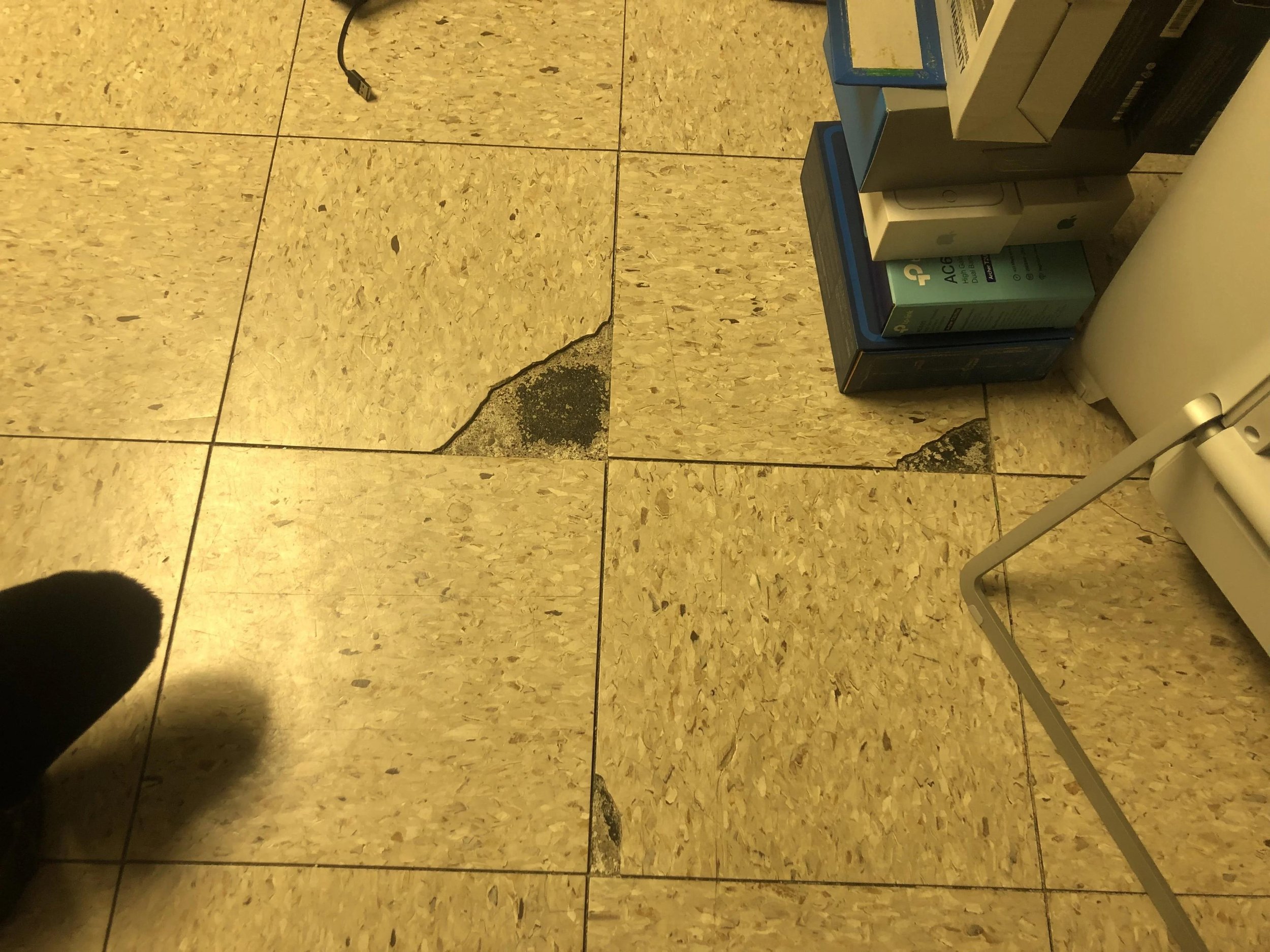
Quick Take
Asbestos tile is common in older Oahu homes, especially mid-century builds and remodels. Most of the time, it is safest when left alone and kept in good condition. The risk jumps when it gets sanded, drilled, cracked up, or removed the wrong way.
What It Is: Asbestos Tile
Asbestos tile usually refers to older vinyl floor tile (often 9x9 inches, sometimes 12x12) that was manufactured with asbestos fibers mixed in for strength and heat resistance. The tile itself can be fairly durable.
The bigger “gotcha” is often what’s underneath: the mastic adhesive (sometimes called “black mastic”) or underlayment used to stick the tile down may also contain asbestos, depending on the era and product.
Important point, neighbor to neighbor: asbestos is a material, not a look. You cannot confirm it just by eyeballing it. You can only treat it as “suspect” based on age and type, then confirm with proper testing when needed.
Why It Matters on Oahu
Oahu’s homes and climate have their own personality, yeah? Trade winds help, but we still deal with humidity, rain, salty coastal air, and older construction styles. Here’s why that matters with asbestos tile:
Moisture and humidity can loosen tiles over time, especially where water gets trapped (bathrooms, laundry areas, kitchens, entries).
Salt air speeds up corrosion on fasteners and transitions, and can contribute to little gaps where water sneaks in.
Termites and pests can damage subfloors in older homes, causing uneven spots that crack tile.
Mixed-era remodels are common on Oahu. A home might have original flooring in one room and newer layers on top in another. That layering can hide asbestos tile until a renovation peels things back.
Single-wall homes and older framing sometimes move a little more with temperature and moisture changes, which can stress brittle flooring layers.
So the local risk is not “asbestos appears because of Hawaii weather.” It’s that Hawaii conditions can wear down floors, and then people start scraping, sanding, or demoing to “make it nice.” That is when trouble can start.
Common Signs
These signs do not prove asbestos tile, but they are common clues that a floor might be older, layered, or worth treating carefully:
Small square tiles (often 9x9) in older kitchens, hallways, or bedrooms
Multiple flooring layers visible at door thresholds or vents
A hard, brittle tile that snaps or chips instead of bending
Black or very dark adhesive under tile when a corner lifts
Cracked, curling, or loose tiles, especially near wet areas
Old remodel marks like patched spots, mismatched tiles, or uneven transitions
Powdery debris around broken tile edges after moving appliances
Floor feels spongy in spots (could be subfloor moisture or termite damage underneath)
Quick callout: if you see a broken tile area and it looks dusty, pause. No sweeping, no shop-vac, no sanding.
What Causes It
Asbestos tile problems usually come from normal building aging plus human activity:
Wear and tear: decades of foot traffic, moving furniture, rolling carts.
Moisture intrusion: small leaks, wet mopping, overflowing washers, poor bathroom ventilation.
Subfloor movement: termite damage, rot, or settlement can make tiles crack.
Poor past repairs: patching with the wrong products, or ripping out sections without proper controls.
Renovation work: drilling for new cabinets, grinding high spots, or removing old floors to install new ones.
Mechanism in plain terms: asbestos becomes a bigger health concern when fibers get released into the air. That happens most when materials become friable (easy to crumble) or when people mechanically disturb them.
Risks and “When It’s Serious” for Asbestos Tile
Health risk
Asbestos fibers are a known health hazard when inhaled. The risk increases with airborne fibers, repeated exposure, and uncontrolled disturbance.
Most intact asbestos tile is considered lower risk than fluffy insulation or damaged pipe wrap because the fibers are bound in the tile. But “lower risk” is not “no risk,” especially if it is cracking, grinding, or being removed.
Safety and home risk
It can also become a practical home problem:
Renovations can stall if asbestos is suspected mid-project.
Damage can spread if moisture keeps getting in under the tile.
Cost can escalate if a small repair turns into a full floor demo under time pressure.
When it’s serious
Call it serious when any of these are true:
Tiles are breaking up or turning dusty
You see sanding, grinding, or drilling happening on suspect flooring
There’s water damage and the floor is coming apart
You’re planning a remodel that will disturb the floor layers
Kids, kupuna (elders), or anyone with respiratory issues spend a lot of time in the space and the floor is deteriorating
Safety note: If you not sure, pause and call a pro. Better to slow down than stir up something you cannot see.
What You Can Do Safely
These are DIY-safe steps that focus on reducing disturbance and keeping the area stable.
Safe steps
Treat it as suspect if the home is older and the tile fits the pattern.
Limit traffic over cracked areas. Put a temporary mat or rug down (no adhesive tapes that might pull material up).
Keep it dry. Fix leaks. Use a bath fan. Wipe up spills quickly.
Gentle cleaning only. Damp wipe for small debris. Avoid dry sweeping.
Plan your remodel smart. Often you can install certain flooring systems over the old tile if the surface is stable and level, depending on product requirements.
What NOT to do
Do not sand, grind, scrape, or drill into suspect tile or adhesive.
Do not pull up tiles “just to see what’s under.”
Do not use a regular shop-vac on debris. (Many standard vacuums can blow fine dust back out.)
Do not demo the floor without a plan for proper containment and disposal.
If you already disturbed it by accident: stop work, keep people out, avoid fans that blow dust, and get professional guidance on next steps.
FIXIT Recommendation: What We Typically Do
We keep it practical. Every house is different, and Oahu homes especially can be a mixed bag of old and new layers.
What we inspect/check on-site
Age and flooring history (when known) and where the suspect tile appears
Condition of tile and seams: cracked, loose, curling, missing sections
Moisture sources: plumbing leaks, laundry overflows, bathroom ventilation, exterior water entry
Subfloor stability: soft spots, bounce, termite damage indicators, rot
Transitions and height changes: doorways, sliders, appliance areas, stairs
Project goals: keep existing, cover over, partial repair, or renovation prep
We do on-site assessment on Oahu, so photos not always required. We may ask for measurements or a few pictures for quicker quoting on certain jobs.
Typical fixes/repairs we recommend
Options depend on condition and your plans:
Stabilize and protect (best when tile is intact): We may recommend keeping the tile in place and improving the surface protection, especially if you are not remodeling right now.
Encapsulation approach (when surface is worn but stable): In some cases, it’s possible to use products or systems designed to seal and isolate the surface, then install a new finish floor.
Repair the “why” first: If moisture or subfloor movement is causing cracks, we focus on leak fixes, ventilation improvements, and subfloor repairs so the problem does not keep growing.
Flooring overlay plan: For many homeowners, the goal is a clean new floor without disturbing older layers more than necessary, as long as the substrate meets the new flooring requirements.
We stay in our lane. If the best next step involves specialized asbestos testing or abatement, we will tell you that plainly.
How we help prevent it from coming back
Address humidity and ventilation in wet rooms
Improve water control: supply lines, drains, washer pans, caulking where appropriate
Reinforce subfloor integrity so tile layers are not flexing
Upgrade transitions and thresholds to reduce edge lifting
Recommend a maintenance rhythm that fits Oahu life (beach sand, wet slippers, rainy season)
Repairs and Typical Solutions
Here are common pathways homeowners choose. We are not quoting prices here because each home’s layers and access are different, but these points explain what drives cost.
1) Leave it in place (manage and monitor)
Pros: Lowest disturbance, often fastest, can be perfectly safe when in good condition.
Cons: Does not “remove the risk” if future renovations disturb it.
Cost factors: Condition, size of area, moisture issues, and whether edges are failing.
2) Cover over it with a new floor system
Pros: Avoids tearing out suspect layers, improves look quickly, good for remodel timelines.
Cons: Requires a stable, level surface. Adds floor height, which can affect doors and transitions.
Cost factors: Leveling needs, transition work, door trimming, appliance clearances, and material choice.
3) Encapsulation-style approach before new flooring
Pros: Adds an extra layer of isolation when appropriate, helps with worn surfaces.
Cons: Must be compatible with your flooring system and the existing condition.
Cost factors: Prep work, product system, cure time, and room downtime.
4) Removal and replacement (specialty work)
Pros: Clears the old layer, simplifies future remodels.
Cons: Highest risk if done wrong, and typically requires specialized handling and disposal.
Cost factors: Square footage, number of layers, adhesive type, access, containment needs, and scheduling.
Big picture: Condition + layers + moisture + access are the usual drivers. The “cheap quick rip” often becomes the expensive one later.
Common Myths
Myth: If it’s under new flooring, it’s automatically safe.
Reality: Covering can be safe if the old layer is stable and not disturbed. But future work can re-expose it.Myth: You can tell asbestos tile by the pattern.
Reality: Patterns repeat across eras. Age and type can raise suspicion, but testing confirms.Myth: One cracked tile means the whole house is contaminated.
Reality: Risk depends on disturbance and airborne dust. Contain the situation and get guidance.Myth: Wet mopping is always safe.
Reality: Gentle damp cleaning is safer than dry sweeping, but aggressive scrubbing can still damage weak tiles.Myth: A shop-vac makes it cleaner.
Reality: Many standard vacuums can spread fine dust.
Preventive Maintenance for Hawaii Homes
Use this simple checklist to keep floors stable in Oahu conditions:
Fix leaks fast (sinks, toilets, washer hoses, AC drains)
Run bathroom fans during showers, and crack a window when weather allows
Keep wet areas dry, especially around laundry machines
Use entry mats to reduce sand and grit (it acts like sandpaper)
Avoid dragging heavy furniture or appliances across old tile
Watch for soft spots that could hint at subfloor moisture or termites
Maintain caulking and seals where water commonly splashes
Plan renovations with a “what’s under it?” mindset before demo day
FAQ
1) Is asbestos tile common in Oahu?
Yes, it can be common in older homes and older remodel layers, especially mid-century era materials.
2) Is asbestos tile dangerous if it’s in good shape?
Often the risk is low when it is intact and not disturbed. The risk rises when it breaks, becomes dusty, or gets sanded or removed.
3) What should I do if a tile cracked?
Pause. Limit traffic, avoid sweeping dust, and prevent further breakage. Then get an on-site assessment to plan the safest fix.
4) Can I install new flooring over asbestos tile?
Sometimes, yes, depending on the condition, levelness, and flooring system requirements. A pro can help confirm whether an overlay is appropriate.
5) Does black adhesive always mean asbestos?
Not always. “Black mastic” can be asbestos-containing in some older installations, but you cannot confirm by color alone.
6) I already pulled up a few tiles. What now?
Stop work and avoid creating more dust. Keep the area closed off, do not run fans blowing across it, and get professional guidance on next steps.
7) Do I need pictures before scheduling?
Not always. We do on-site assessment on Oahu, so photos not always required. For faster quoting, we may ask for measurements or a few pictures for certain jobs.
Quick “Call FIXIT If…”
Tiles are cracking, lifting, or missing and you see dusty debris
You have a leak that soaked the floor layers
The floor feels soft or bouncy (possible subfloor or termite issues)
You are planning a remodel that will disturb flooring
You need a clean plan for transitions, doors, and height changes
You want the safest option to stabilize, cover, or prepare the area without guessing
Pau (finished) is better than rushed. Better catch um early than wait till it get worse.