

Canec Ceiling: A Practical Guide for Oahu Homes
By FIXIT Oahu Team | February 23, 2026 | 8 minutes to read
Quick Take
A Canec ceiling is an older Hawaii ceiling material made from sugarcane fiberboard. It can handle decades of use, but it is sensitive to moisture and can be risky to disturb because some Canec was treated with inorganic arsenic. If your ceiling is intact and well-painted, the safest plan is usually to keep it sealed and fix any leaks fast.
What It Is: Canec ceiling basics
A Canec ceiling is made from bagasse, the leftover fiber from sugarcane after the juice is extracted. Canec panels were widely used across Hawaiʻi, especially before drywall became common.
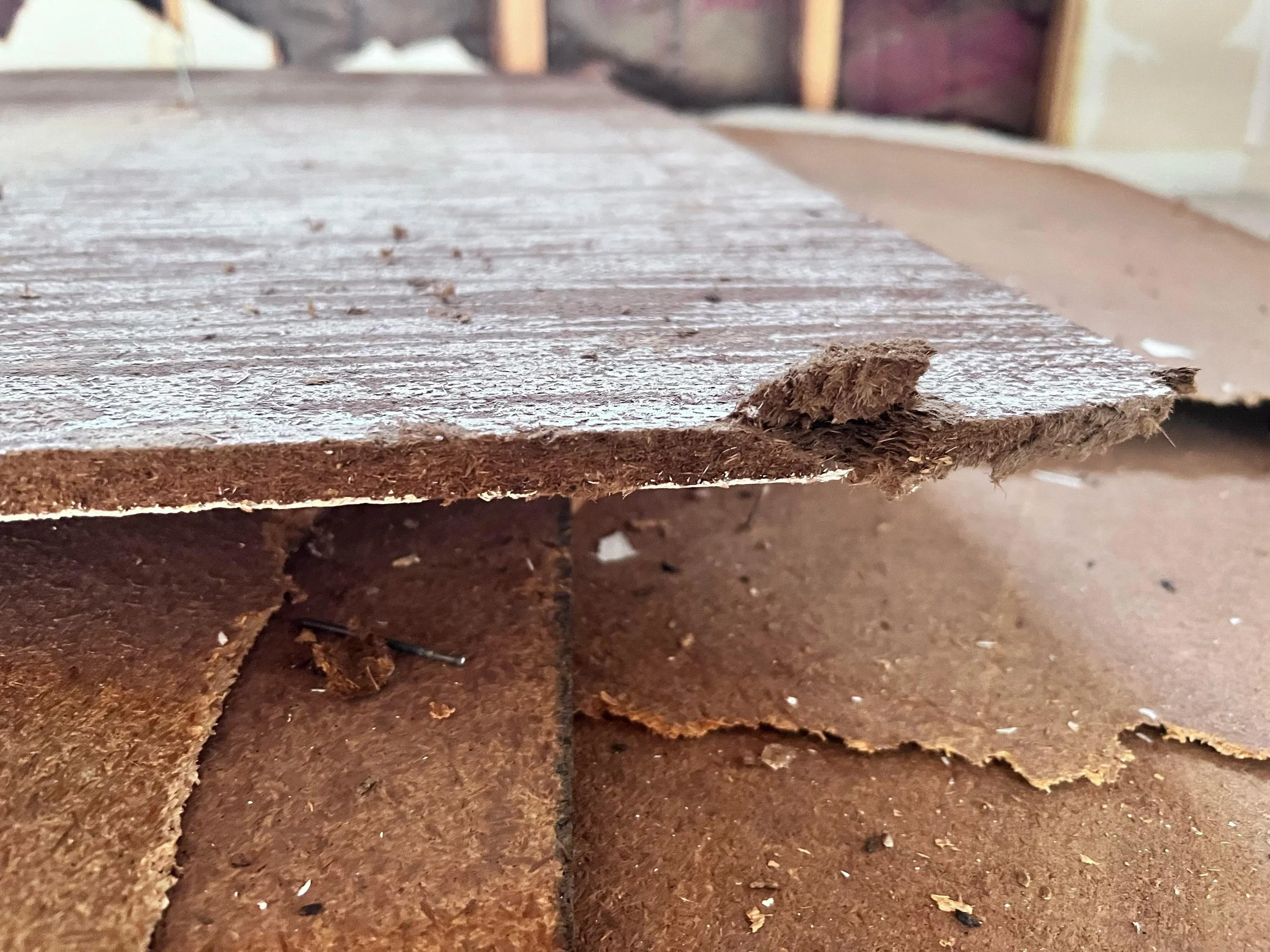
From the living space, it often looks like smooth painted drywall. At edges or openings, you may see a brownish-orange fiberboard core, and some ceilings show V-groove seams or thin battens covering joints.
One key difference from drywall: Canec is softer and more moisture-sensitive. Also, Hawaii Department of Health guidance notes that Canec materials may contain inorganic arsenic from historical anti-termite treatments, which is mainly a concern when dust is created during sanding, drilling, cutting, or demolition.
Why It Matters on Oahu: Canec ceiling plus island conditions
Oahu’s climate is perfect for beaches and tough on buildings.
Humidity and warm air can soften fiberboard and weaken paint films.
Trade winds can drive rain into small roof or flashing gaps. A “small leak” can stain a ceiling later.
Coastal salt air speeds corrosion on nails, staples, and roof hardware, which can loosen sections over time.
Termites are a constant background risk. Even if Canec was treated, the wood furring strips and framing behind it still need protection.
Older single-wall homes often have less insulation and different ventilation patterns, so condensation and heat buildup can show up in ceilings.
Common Signs
Water stains, rings, or brown streaks
Sagging, waves, or a “pillowed” look between supports
Soft spots that feel spongy with gentle pressure
Cracks at seams, battens, or around light fixtures
Bubbling paint, peeling, or chalky residue
Musty smell or mild mildew near corners and closets
New debris on the floor after storms or heavy rain
Red flag: fast-growing stains, active dripping, or visible bowing.
What Causes It
Most Canec ceiling issues come from moisture first, movement second.
Moisture sources
Roof leaks (valleys, flashing, penetrations)
Plumbing leaks from upstairs baths or laundry
AC duct sweating or clogged condensate drains
Bathroom steam with weak exhaust habits
When Canec gets wet, it can swell and lose stiffness. When it dries, it may shrink unevenly, leaving cracks or sag lines.
Movement and fastening
Over decades, wood framing can settle and fasteners can corrode, especially in salt air. That can show up as popped nails, loose seams, or sections that drop slightly.
Risks and “When It’s Serious”
Health and dust
Canec is not the same as asbestos, but some Canec was treated with inorganic arsenic. The risk rises when you disturb it and create fine dust.
Moisture, mold, and hidden damage
A stain is often proof of a leak. If moisture stays, mold can develop and wood members behind the ceiling can degrade.
Safety
Sagging ceilings can fail, especially after repeat wetting.
Wet areas near lights or fans can become an electrical hazard.
Termite damage in hidden wood can increase the scope of repair.
If you not sure, pause and call a pro. Avoid dust-making work until the ceiling type and condition are confirmed.
What You Can Do Safely
DIY-safe steps only, no cutting or sanding.
Do
Stop the water source. That is the real “repair.”
Keep the surface sealed. If it is solid and dry, use a quality primer-sealer and paint.
Control humidity. Run bathroom fans, ventilate closets, and use a dehumidifier in problem rooms.
Track changes. Take a dated photo so you can see if stains grow.
Do not
Do not sand, scrape, drill, or cut a suspected Canec ceiling.
Do not pull down sections without planning for containment and cleanup.
Do not use a regular shop vac on debris. Fine dust needs HEPA-rated control.
FIXIT Recommendation (What We Typically Do)
a) What we inspect/check on-site
Confirm material type and overall stability
Trace moisture: ceiling stains, attic conditions when accessible, and likely leak paths
Check nearby plumbing and HVAC sources (bathrooms, ducts, condensate)
Look for pest signs and wood damage in furring strips
Verify fixture safety around any wet areas
We do on-site assessment on Oahu, so photos not always required. We may ask for measurements or a few pictures for quicker quoting on certain jobs.
b) Typical fixes/repairs we recommend (options + why)
Small, dry, stable areas: secure loose edges, patch, prime-seal, repaint
Widespread softness or sagging: plan partial or full replacement with modern materials
Cosmetic refresh goals: consider an overlay approach only after moisture is solved and fastening is planned correctly
Any suspected hazardous dust situation: recommend appropriate testing and a safe work plan before demolition
c) How we help prevent it from coming back (maintenance plan)
Fix the source: roof flashing, plumbing leaks, condensate routing
Improve ventilation habits: fans during showers, airflow in closets
Post-storm checkups, especially on the makai side (ocean-facing) where wind-driven rain hits hardest
Encourage termite inspection cadence and moisture control as prevention
Repairs and Typical Solutions
Common approaches, with pros and cons.
1) Seal and repaint (when sound and dry)
Pros: least disruption, keeps dust low
Cons: does not fix stains if the leak is still active
2) Local patch and blend
Pros: good after a confirmed one-time leak
Cons: matching flatness can be tricky, repeat moisture will show again
3) Overlay with a new ceiling layer
Pros: cleaner look with less demolition in some cases
Cons: adds weight, can hide moisture problems if rushed
4) Full removal and replacement
Pros: best reset for failing ceilings and remodels
Cons: most disruption, needs serious dust control and planning in older homes
What affects cost (no exact prices)
Size, ceiling height, and access setup
Number of fixtures to detach and reinstall
How much water damage exists behind the finish
Level of finish expected (basic vs paint-perfect)
Whether testing, containment, or specialty disposal is needed
Common Myths
Myth: “Canec ceiling is asbestos.”
Correction: Canec is sugarcane fiberboard. The key safety concern is dust and potential arsenic treatment, not that it is asbestos.Myth: “Paint fixes everything.”
Correction: Paint helps seal, but only after moisture is solved.Myth: “Skim coat always makes it better.”
Correction: Added weight can worsen sagging if the base is soft.Myth: “Termites are not an issue because it was treated.”
Correction: The wood behind the ceiling is still vulnerable, especially with moisture.
Preventive Maintenance for Hawaii Homes
Scan ceilings for new stains after big rain
Run bathroom fans during showers and 15 to 20 minutes after
Keep AC drains flowing and ducts insulated where needed
Address roof flashing and penetrations early, not “later”
Keep closets aired out, avoid packing items tight to corners
Schedule regular termite inspections and keep moisture down
FAQ
How can I tell if I have a Canec ceiling?
Check a small edge at a vent or fixture opening. Canec often shows a brownish-orange fiberboard core and may have V-groove seams.
Is a Canec ceiling safe to live with?
Often yes when intact and well-painted. The main risk is creating dust during sanding, drilling, or demolition.
Can I repaint a Canec ceiling?
Usually, if it is dry, firm, and not flaking. Use a primer-sealer and avoid aggressive scraping or sanding.
Why do ceiling stains come back?
Because the leak or condensation source was not fully fixed, or the wrong primer was used for stain blocking.
Should I cover it with drywall instead of removing it?
Sometimes. An overlay can reduce disruption, but it adds weight and needs a proper fastening plan. It should never be used to “hide” active moisture.
Can I install new lights or a ceiling fan in Canec?
It often requires cutting and drilling, which can create dust. In older homes, this is usually best handled with a controlled pro approach.
Quick “Call FIXIT If…”
The Canec ceiling is sagging, bowing, or feels unstable
Stains are growing fast, or there is active dripping
You see crumbling material or recurring dust
There is a musty smell that suggests hidden moisture
Any light, fan, or wiring is near a wet area
You are remodeling and want the safest plan from the start
Better catch um early than wait till it get worse.