From the Sugar Mill: Canec Ceilings
If you own a plantation-style or older single-wall home on Oahu, you’re likely living under a piece of Hawaii’s agricultural history: Canec.
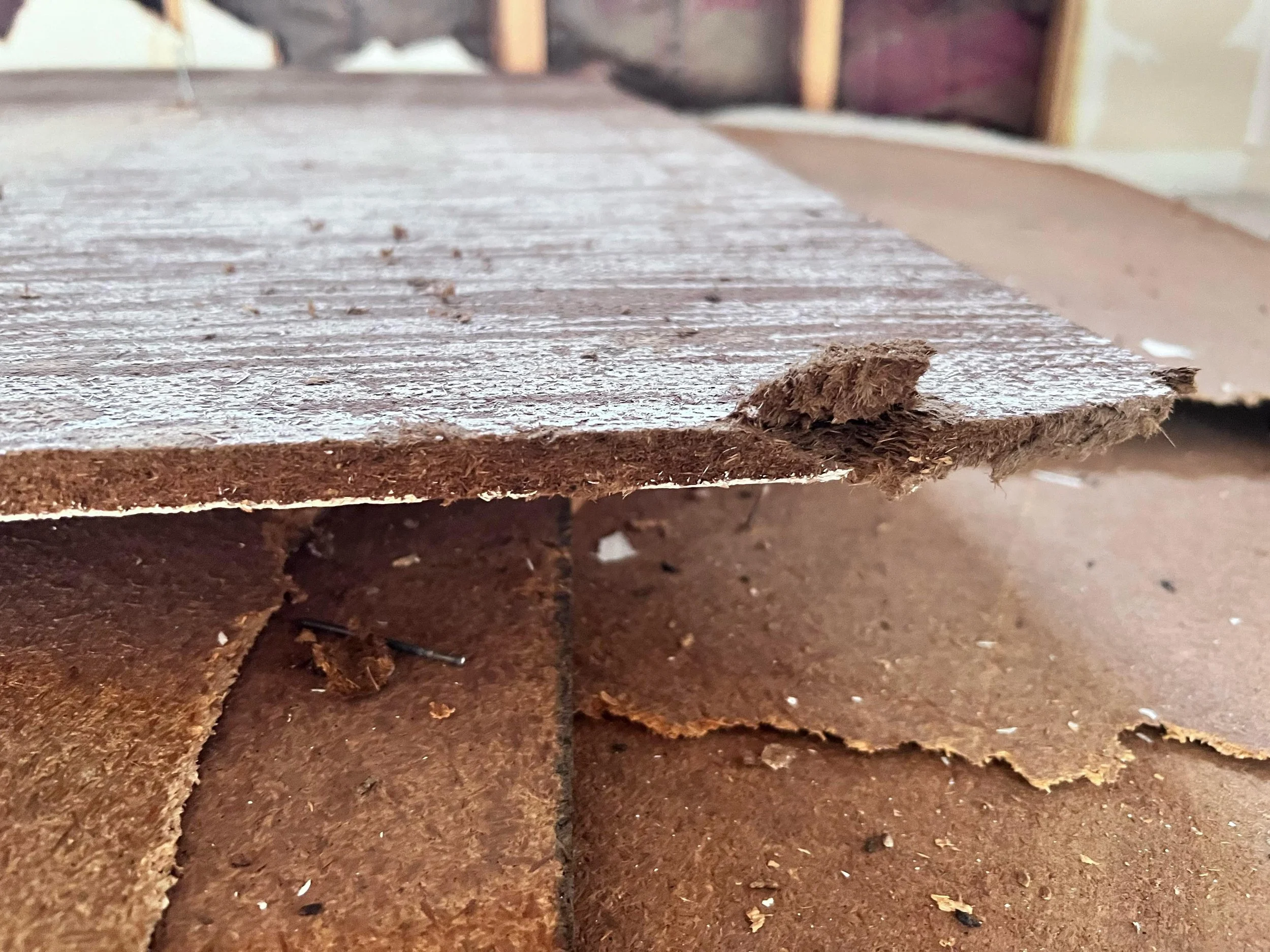
Unique to the islands, Canec is a fiberboard made from bagasse—the processed sugarcane waste left over after the juice was squeezed out. For decades, it was the go-to ceiling material here because it was cheap, local, and provided decent insulation. While it’s a cool bit of history, it requires a specific approach when it comes to maintenance.
The Identification: Sugarcane and Pockmarks
How do you know if you have it?
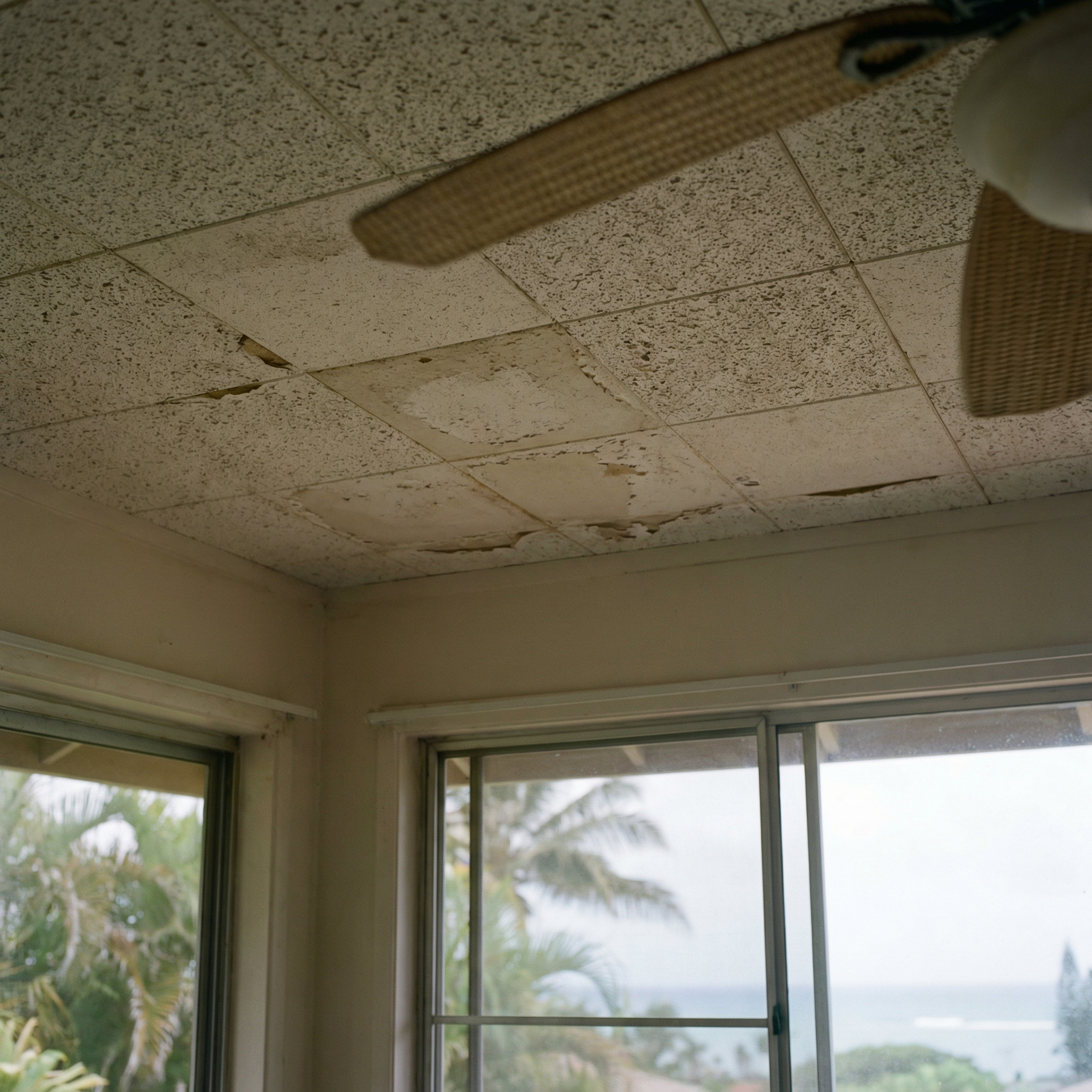
The Look: Canec usually comes in 4 x 8 foot sheets or square tiles. It has a soft, fibrous, fuzzier texture than drywall.
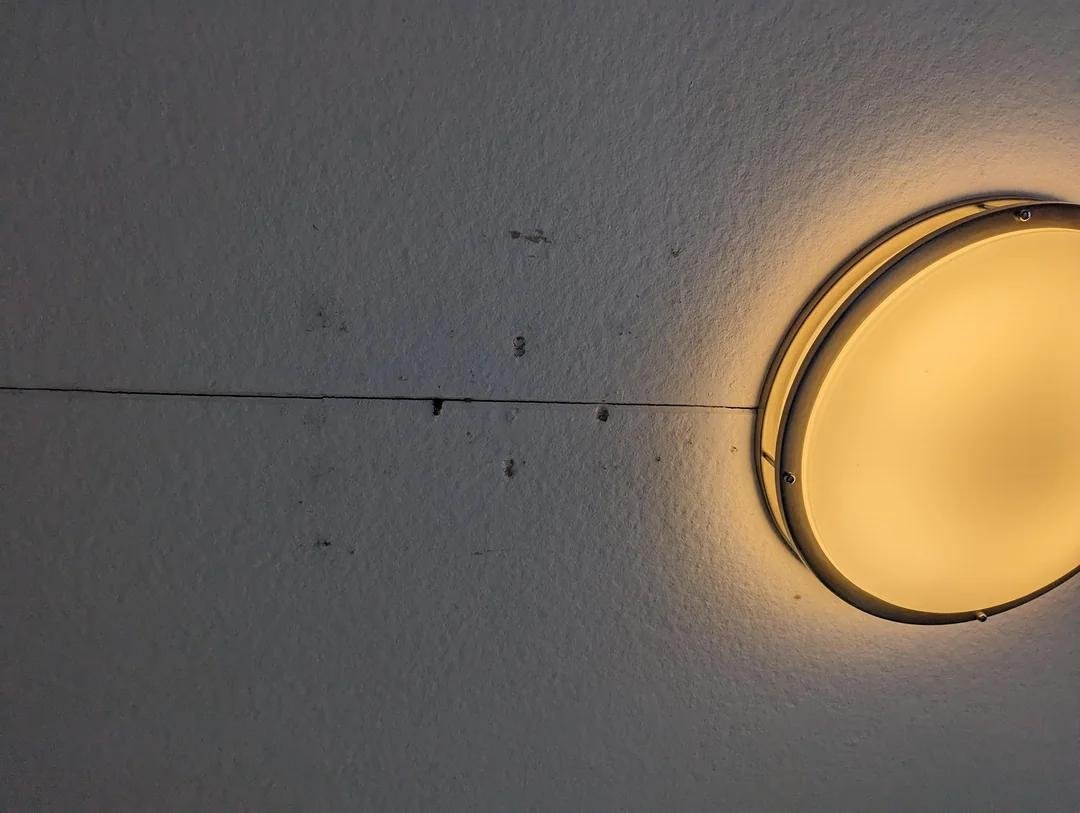
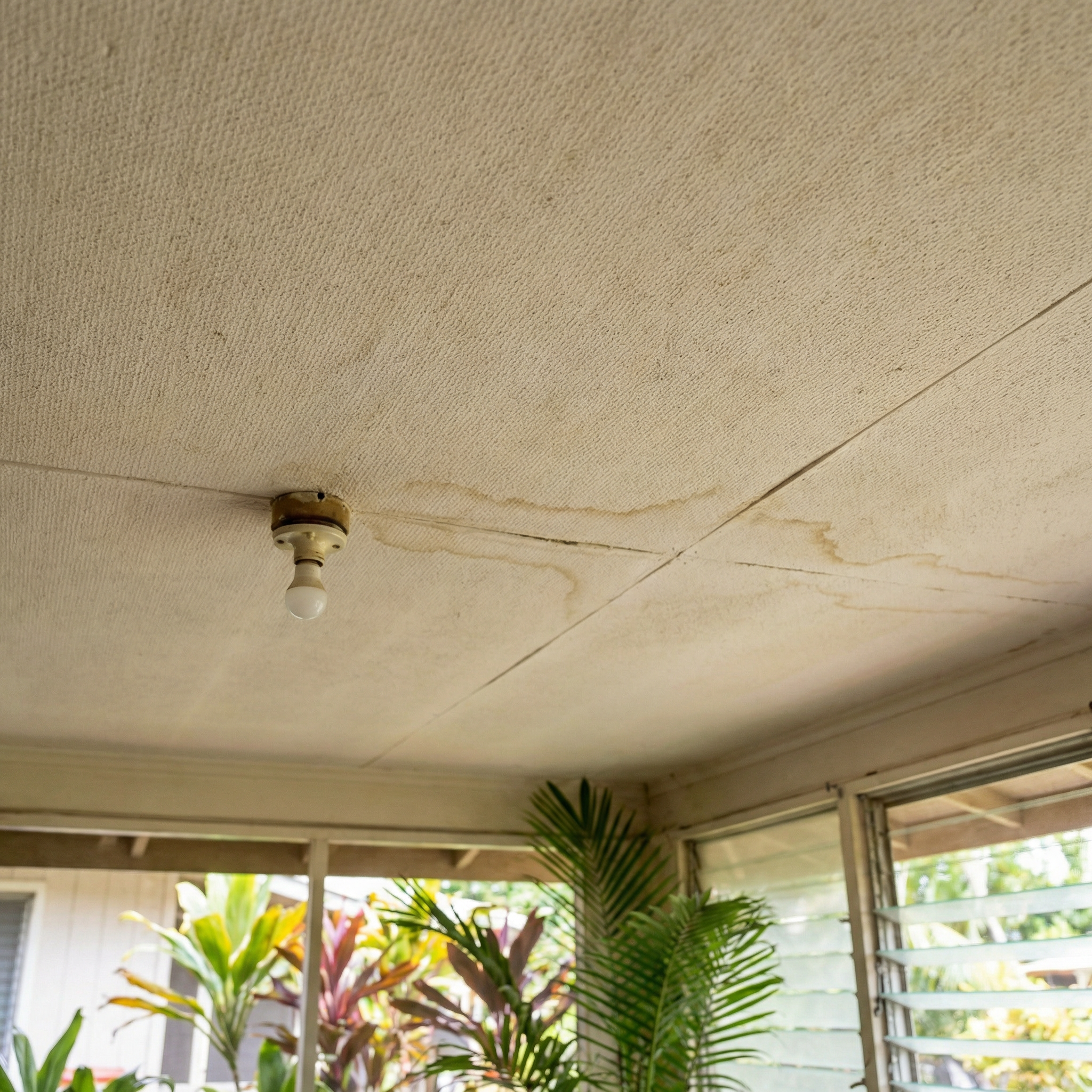
The V-Groove: You’ll see V-shaped seams at the joints between the boards.
The Pockmarks: One of the dead giveaways of old Canec is the presence of small, circular holes. These are often tracks from decades-old termite activity that have been painted over.
The Risk: The Arsenic Secret
To make sugarcane fibers termite-proof, manufacturers treated Canec boards with inorganic arsenic.
Good News: It doesn't off-gas like a vapor. If your ceiling is intact and well-painted, it’s generally safe to live with.
Dangerous Dust: The danger starts when you cut, drill, sand, or break the boards. The dust created is toxic if inhaled. This is why you should never use a regular vacuum on Canec debris—the filter will just catch the big stuff and blow the microscopic arsenic dust back into your living room air.
The Hawaii Problem: Sagging and Moisture
Canec is essentially a giant sponge made of sugar fibers.
Humidity & Sag: Canec can absorb moisture from the air, become heavy, and start to sag between the ceiling joists.
Leak Stains: When a roof leak hits Canec, it doesn't just leave a ring; it often softens the board until it’s spongy and peeling. Because of the arsenic and fiber content, these stains are notoriously hard to kill with regular paint—they almost always bleed back through.
The FIXIT Advice: Seal, Don't Scrape
If your Canec ceiling is looking a little rough, here is the safest path forward:
Keep it Sealed: If the boards are flat and dry, a high-quality primer-sealer (like an oil-based stain blocker) and a fresh coat of paint are your best friends. It locks the fibers in place.
Wet Method Removal: If a board is sagging or rotting and must come out, it needs to be handled by a pro. We use a wet method—misting the board with water to keep the dust from flying—and follow strict containment protocols.
The Overlay Option: Often, the safest FIXIT move for a stable but ugly Canec ceiling is to leave it alone and install a new layer of thin drywall right over it. This seals the arsenic away forever without the mess of demolition.
Common Signs It’s Time to Act
Spongy Texture: If you press gently and it feels soft like a loaf of bread, moisture is trapped.
Visible Bowing: If the seams are pulling away from the ceiling, the fasteners are failing.
Crumbling Edges: If you see sawdust or fibers falling from the corners, stop and get an assessment.
The Bottom Line: Canec is a classic Hawaii material that deserves respect. If it’s painted and dry, leave it be. If you’re planning to install a new ceiling fan or remodel, do it the safe way.
Quick Summary: Canec is a historical building material made from bagasse (sugar cane fiber) and inorganic arsenic compounds that was widely used for interior walls and ceilings in Hawaii homes built between the 1930s and 1960s. Understanding how to identify, test, and safely manage or repair Canec boards prevents toxic dust exposure during home renovations.
💡 Quick Reference: Oahu Canec Ceiling Care
What Is Canec
An insulating wallboard manufactured in Hilo from sugarcane byproduct and treated with arsenic for termite resistance.
Common Locations
Mid-century plantation homes, older single-family residences in Honolulu, Manoa, Kaimuki, and Windward Oahu.
Key Safety Rule
Never sand, saw, scrape, or aggressively disturb dry Canec boards, as disturbing the fibers releases hazardous inorganic arsenic dust into the air.
Best Remediation Approach
If in good condition, Canec is safest when left intact, encapsulated with specialized primers, or professionally remediated prior to major remodels.
Planning a Ceiling or Interior Room Refresh?
Upgrade your home safely. FIXIT Oahu assists local homeowners and property managers with drywall repairs, ceiling touch-ups, interior painting, and general punch-list maintenance.
📞 Call or Text: 808-721-4647
📧 Email: service@fixitoahu.com
📍 Service Area: Honolulu, Windward, and Leeward Oahu
Q: Is Canec ceiling board dangerous if left alone?
A: Intact, undamaged Canec in good condition poses minimal risk. It only becomes hazardous when cut, sanded, scraped, or broken, which releases toxic dust.
Q: How do I know if my ceiling is made of Canec?
A: If your home was built between 1930 and 1960 and has soft, fiber-based ceiling boards or 12x12 tiles with a fibrous texture, it is likely Canec.
Q: Can you paint over Canec ceilings safely?
A: Yes, applying a high-grade primer and acrylic paint encapsulates the fibers and keeps dust sealed, provided the boards are dry and structural.
Q: Why was arsenic used in Canec manufacturing?
A: Inorganic arsenic compounds were mixed into sugarcane fiber pulp during manufacturing to make the boards resistant to termites and fungal decay.