Cast Iron Pipes
If your Oahu home was built before 1975, your sewer and waste lines are likely made of Cast Iron. These pipes were the industry standard for decades because they’re strong, heavy, and—unlike plastic—they’re remarkably quiet when the toilet flushes upstairs.
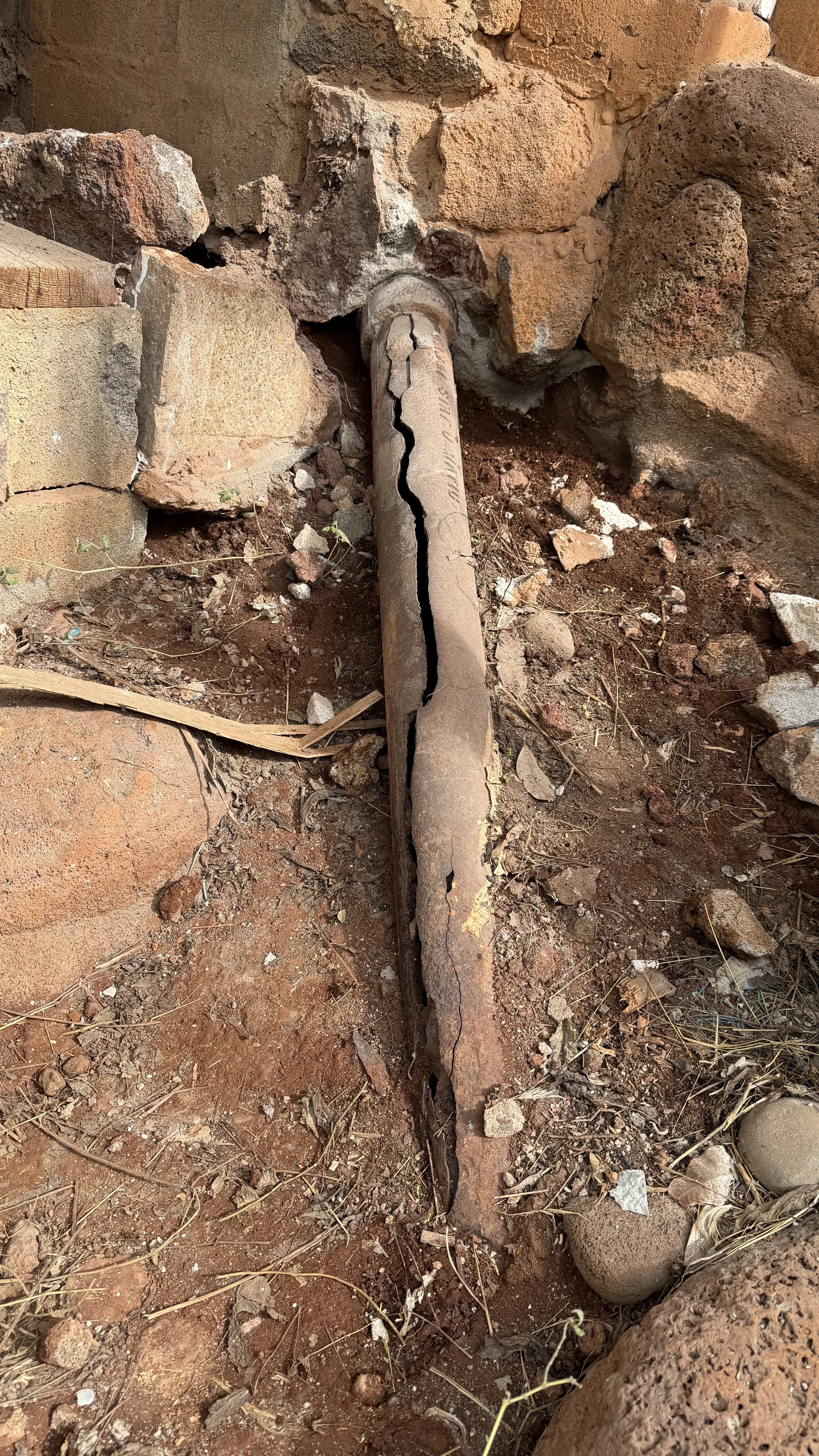
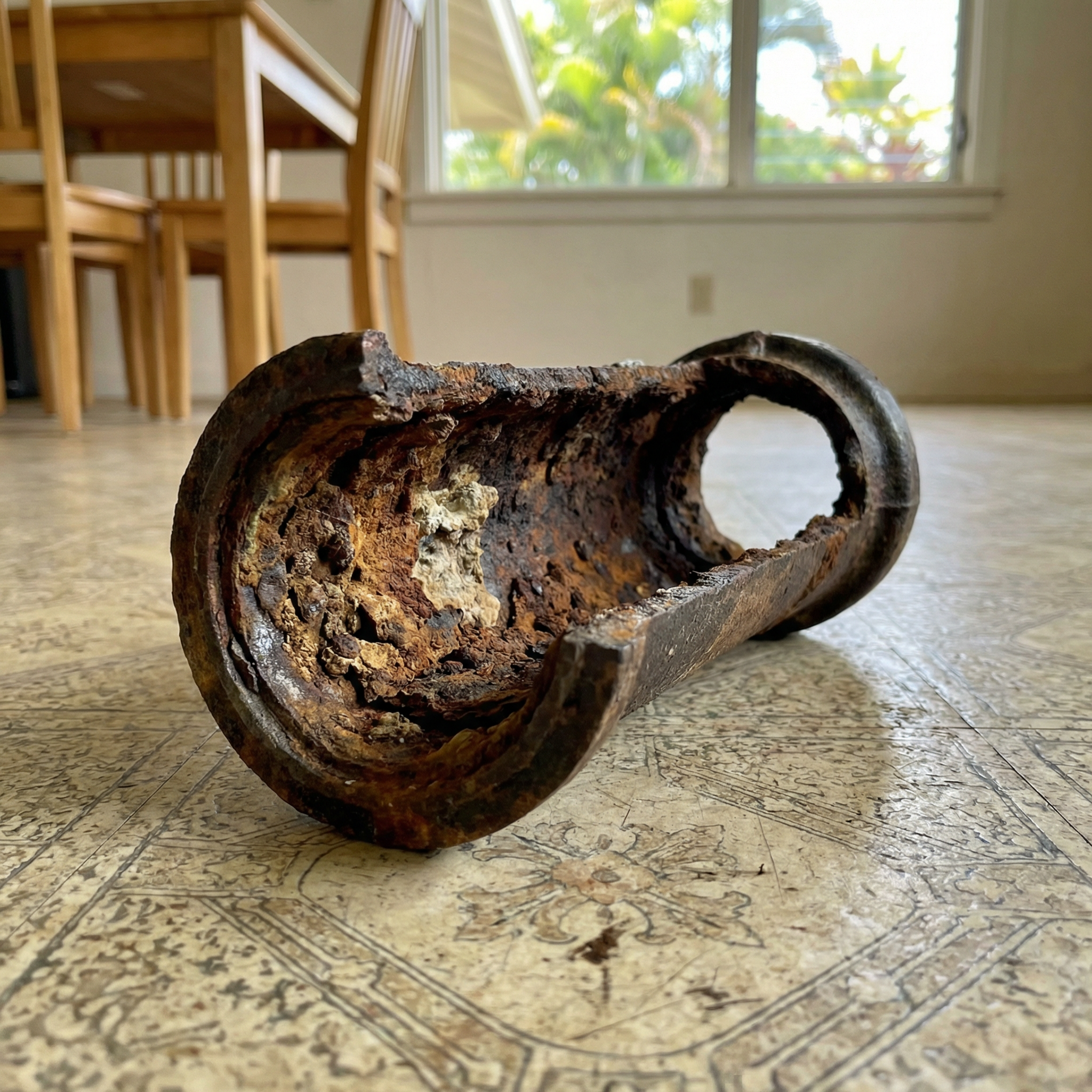
However, after 50+ years in Hawaii’s environment, these iron giants are reaching their retirement age. Because the damage starts on the inside, you usually don't know there’s a problem until your drains slow down or a sewer smell starts lingering in the hallway.
The Hawaii Problem: Channeling and Roots
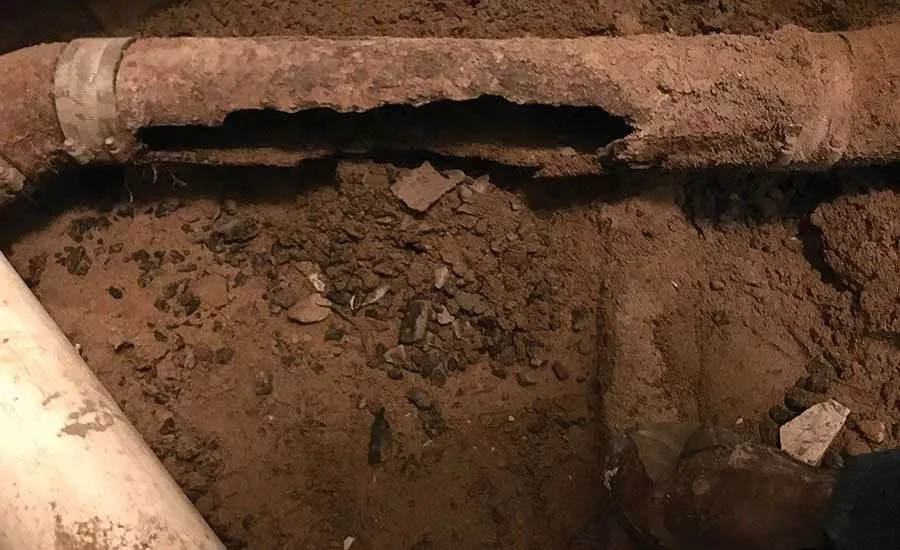
Channeling: The bottom of the pipes can sometimes rust away from the inside out. Eventually, there is no bottom left—just a channel in the dirt under your house where sewage flows. This leads to sinkholes under the house and constant clogs.
The Tree Root Factor: In neighborhoods like Manoa or Nu'uanu, invasive roots (think Banyan, Ficus, or large Mango trees) are experts at finding moisture. They sniff out the tiny hairline cracks in old cast iron and grow into them. Eventually, the roots implode the pipe, filling it with a thick mat of hair-like fibers that no plunger can fix.
Identification: Heavy and Rusty
Peek under your kitchen sink or into your crawlspace. If you see large, thick, black or rust-colored metal pipes (usually 2 to 4 inches wide), you’ve got cast iron. Look for weeping—white mineral deposits or orange streaks—at the joints. That’s the pipe’s way of crying for help.
The FIXIT Move: Transitioning to PVC
When cast iron fails, we usually transition the system to modern PVC (SDR-35). It’s smooth, rust-proof, and roots have a much harder time getting through them. You have two main ways to handle this:
Option A: The Big Dig (Trenching)
This is the traditional way: we dig up the old line and replace it with new pipe.
Pros: You get a 100% brand-new system and can correct any "bellies" (low spots) in the line.
Cons: It’s disruptive to your landscaping or, worse, your concrete slab.
Option B: The Tech Fix (CIPP / Pipe Lining)
This is a game-changer for Oahu homeowners. Cured-In-Place-Piping (CIPP) allows a local plumber to "sleeve" your old pipe. We pull a resin-hardened liner through the existing cast iron. It hardens into a "pipe within a pipe" that is as strong as new PVC.
Pros: No digging up your beautiful tile floors or your yard. It’s faster and saves the mess.
Cons: It only works if the original pipe hasn't fully collapsed or shifted significantly.
Common Signs It’s Time to Act
The Gurgle: If your shower gurgles when you flush the toilet, your vent or main line is restricted.
Recurring Clogs: If you’re calling the drain cleaner every 6 months, you don't have a clog; you have a failing pipe.
Sewer Smells: This often means a crack has formed in the upper part of the pipe (the vent), allowing sewer gas to leak into your walls.
The Bottom Line: Cast iron doesn't last forever, especially in our salty, humid air. If you have slow drains or stink smells, a quick sewer scope is the first move. It replaces guessing with a clear picture (video even) of what’s happening underground.
» Quick Summary: Cast iron pipes were the standard drain and waste line material installed in Hawaii homes built before the 1980s. Over decades of exposure to salty island humidity, soil moisture, and household wastewater, cast iron interior walls rust and scale, leading to recurring drain clogs, slow drainage, pipe cracking, and costly under-slab leaks.
💡 Quick Reference: Cast Iron Pipe Care
What It Is
Heavy metal drain and sewer piping commonly used under slab foundations and inside walls in mid-century Oahu homes.
Where It Is Found
Plantation homes, single-family houses, and older condo buildings across Honolulu, Kailua, Kaneohe, and Leeward Oahu built prior to 1980.
Common Signs of Deterioration
Frequent drain backups, foul sewer odors, gurgling toilets, slow-draining sinks, and dark water staining on lower walls or floor slabs.
Best Maintenance Approaches
Avoid harsh chemical drain cleaners that accelerate internal pipe corrosion, hydro-jet lines gently to clear mineral scale, and consider PVC pipe replacement or epoxy lining for aging systems.
Need Help Replacing Fixtures or Plumbing Hardware?
Keep your kitchen and bathroom plumbing running smoothly. FIXIT Oahu assists local homeowners and property managers with faucet replacements, toilet valve repairs, garbage disposal installations, and minor plumbing fixture updates.
📞 Call or Text: 808-721-4647
📧 Email: service@fixitoahu.com
📍 Service Area: Honolulu, Windward, and Leeward Oahu
Q: How do I know if my buried cast iron drain pipes are failing?
A: Common signs include recurring drain clogs, sewer smells near drains, slow water flow, gurgling toilets, or cracked floor tiles above slab piping.
Q: Are chemical drain openers safe for older cast iron pipes?
A: No, harsh chemical drain cleaners react with internal rust scale and accelerate chemical corrosion, eating holes through thin pipe walls.
Q: Can failing cast iron pipes under a slab foundation be repaired?
A: Minor leaks can sometimes be rehabilitated using trenchless epoxy pipe lining. Severely collapsed lines require cutting the slab or re-routing drains.
Q: How long do cast iron pipes last in Hawaii homes?
A: Cast iron pipes typically last 40 to 60 years in island environments before humidity, salt air, and wastewater scale cause cracking or bottom flaking.