Why Wood Doors Swell & Stick on Oahu (And How to Fix Them)
The Science Behind Island Humidity and Swollen Doors
If you have ever had to exert extra force to shove an interior bedroom door shut during rainy weather, or found yourself locked out of a patio door that was working fine two months ago, you are experiencing the effects of Oahu’s environment on natural timber.
Wood is hygroscopic, meaning it naturally absorbs and releases moisture to stay in equilibrium with the surrounding atmosphere:
High Relative Humidity: During periods of sustained humidity, rainstorms, or Kona winds (which blow warm, humid air across the island), wood fibers absorb airborne water vapor and expand across the grain.
Unsealed Edges as Moisture Sponges: When doors are manufactured or trimmed during installation, carpenters often paint or stain the front, back, and side edges—but frequently forget to seal the top and bottom raw edges. These unsealed end-grains act like paper towels, pulling humidity straight into the core of the door panel.
Step 1: Diagnose the Problem Before Cutting or Trimming
Before taking a sander or plane to a sticking door, it is crucial to determine why the door is binding. Trimming wood off a door that simply has loose hinges will leave an unsightly gap once the hardware is tightened.
Check 1: Inspect the Hinges & Screws
Over years of daily use, the weight of a solid core or hollow core door pulls on the top hinge screws. If the screws in the top jamb strip out or back out even 1/16th of an inch, the door will sag diagonally, causing the top-latch corner to rub against the upper jamb.
The Fix: Open the door, support the bottom edge, and tighten all hinge screws. If a screw spins freely, replace it with a longer 3-inch wood screw that reaches past the jamb into the structural wall framing behind it.
Check 2: Check the Strike Plate Alignment
If the door closes flush with the frame but the latch fails to pop into the hole, the issue is vertical alignment rather than panel swelling.
The Fix: Inspect the brass strike plate on the jamb for wear marks. Adjust the plate position slightly using a file or reposition it to align with the latch bolt.
Check 3: Identify Friction Rub Marks
If the hinges are tight and the frame is square, look closely at the edges of the door. Look for areas where paint has scraped off, flaked, or left dark rubbing marks along the frame. These rubbing zones pinpoint exactly where the wood panel has expanded beyond the clearance tolerances of the frame.
Step 2: The Right Way to Fix a Swollen Door on Oahu
If hardware adjustments don't solve the sticking issue, the door edge must be planed down and properly sealed against future moisture intrusion.
Mark the Binding Area: Close the door as far as possible without forcing it. Trace a pencil line along the edge where the door overlaps or binds against the jamb.
Remove the Door Panel: Pop the hinge pins out using a hammer and nail-set, then lift the door off its frame and place it securely on sawhorses.
Plane or Sand the Edge: Use an electric hand planer, block plane, or 80-grit belt sander to remove small amounts of wood along the marked line. Remove only a fraction of an inch at a time, keeping the edge square or giving it a very subtle 2-degree bevel toward the stop jamb.
The Critical Step — Seal All Edges:Do not skip this step. Sand the fresh wood smooth and coat it with a high-grade primer and exterior/interior enamel paint or polyurethane sealer. Ensure you paint the top and bottom raw edges of the door. Sealing the raw grain creates a barrier that stops humidity from penetrating the timber during future rainy weather.
Frequently Asked Questions
Should I trim my door during the dry season or humid season?
It is best to adjust or trim a door when humidity is higher (or after checking that hinges are completely tight). If you plane a door down during an unusually dry spell, it may contract further when dry trade winds blow, leaving an oversized gap between the door and the frame.
Why is my door rubbing at the bottom on the carpet or tile?
Bottom rubbing usually indicates a sagging top hinge, loose subfloor screws, or settling in the doorway header. Tightening the top hinge with a 3-inch frame screw often lifts the latch side of the door enough to clear the floor without needing to trim the bottom edge.
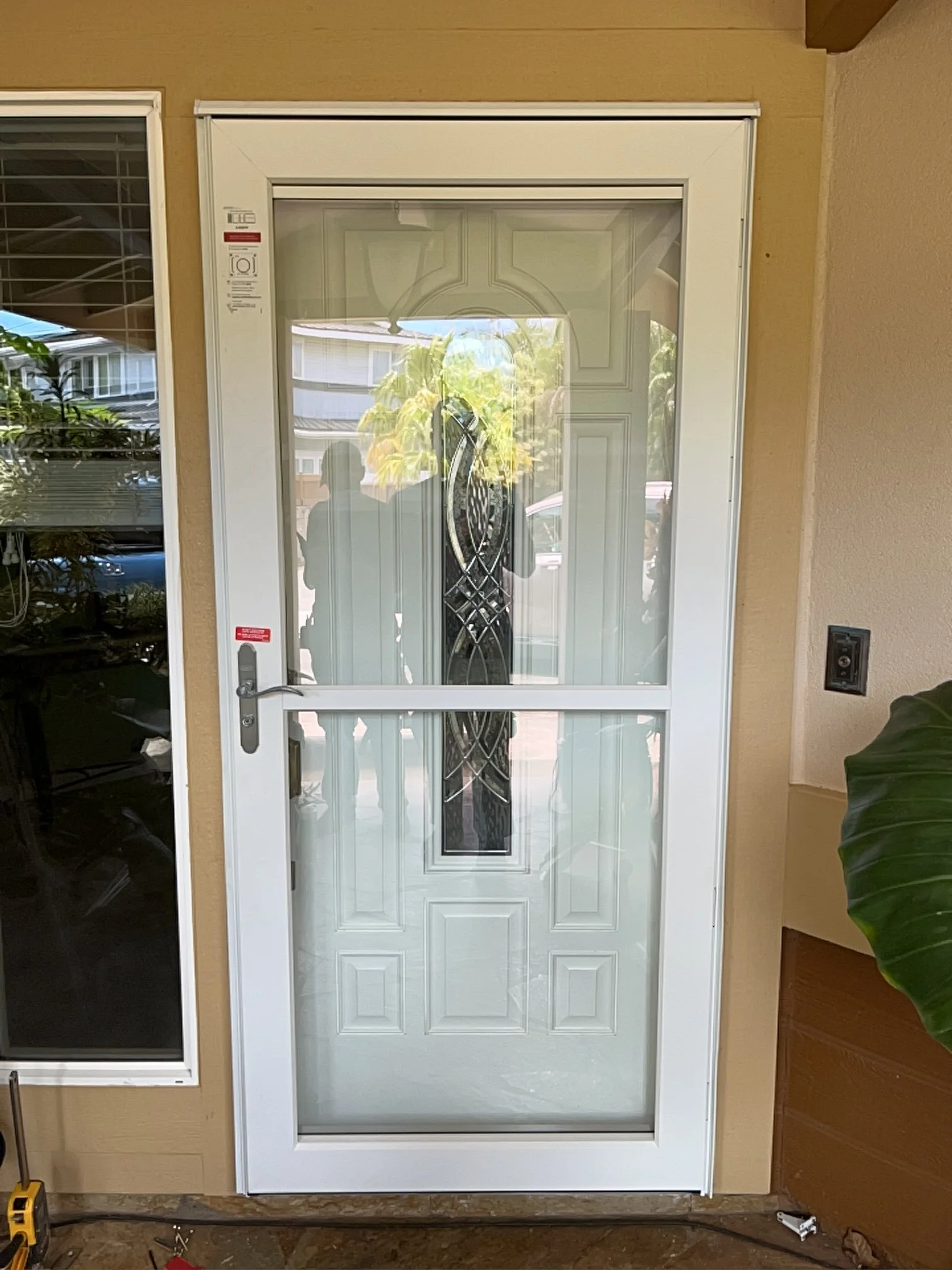
Quick Summary: Wood doors swell and stick on Oahu because timber is a natural, porous material that absorbs atmospheric moisture from high island humidity and humid Kona weather winds. Unsealed top and bottom door edges draw in humidity, causing the door panel to expand in width and thickness. This leads to doors rubbing against frames, sticking in jambs, or failing to latch properly. Fixing a swollen door involves tightening hardware, adjusting hinges, or planing and sealing exposed edges.
🛠️ Troubleshooting Guide: Sticking Doors
Symptom: Door rubs at the top latch corner.
Primary Cause: Loose top hinge screws or sagging frame.
First Action: Tighten top hinge screws; replace with a 3-inch screw into the wall stud.
Symptom: Door sticks along the entire side edge only in rainy weather.
Primary Cause: Humidity expansion into unsealed wood edges.
First Action: Plane the edge lightly and seal all 6 sides of the door with paint/polyurethane.
Symptom: Latch doesn't click into the hole.
Primary Cause: Vertical shift or strike plate misalignment.
First Action: File the strike plate opening or adjust latch position.
Doors Sticking or Rubbing in Your Home?
Skip the hassle of removing heavy doors yourself. FIXIT Oahu provides professional door alignment, hardware adjustments, planing, and sealing services for homeowners and property managers across Oahu.
📞 Call/Text: (808) 721-4647
📧 Email:service@fixitoahu.com
📍 Service Area: Honolulu, Windward, and Leeward Oahu
Q: When is it time to replace my door?
A: Replace your door if the core is rotted, water-delaminated, cracked along the stiles, or if the frame itself is termite-damaged beyond square alignment.
Q: Do I need a solid core or hollow core door?
A: Solid core doors are best for exterior entryways, bathrooms, and bedrooms because they block sound, resist humidity warping, and feel substantial. Hollow core doors work fine for low-impact interior closets on a budget.
Q: Why are doors costly to replace?
A: Door replacements require precise custom fitting, leveling the jamb, mortising hinge pockets, drilling locksets, and painting all six sides—not just hanging a panel.